Search

PO Box 2 Blackball

Paul Maunder's blog

Month

April 2021

Tap tap

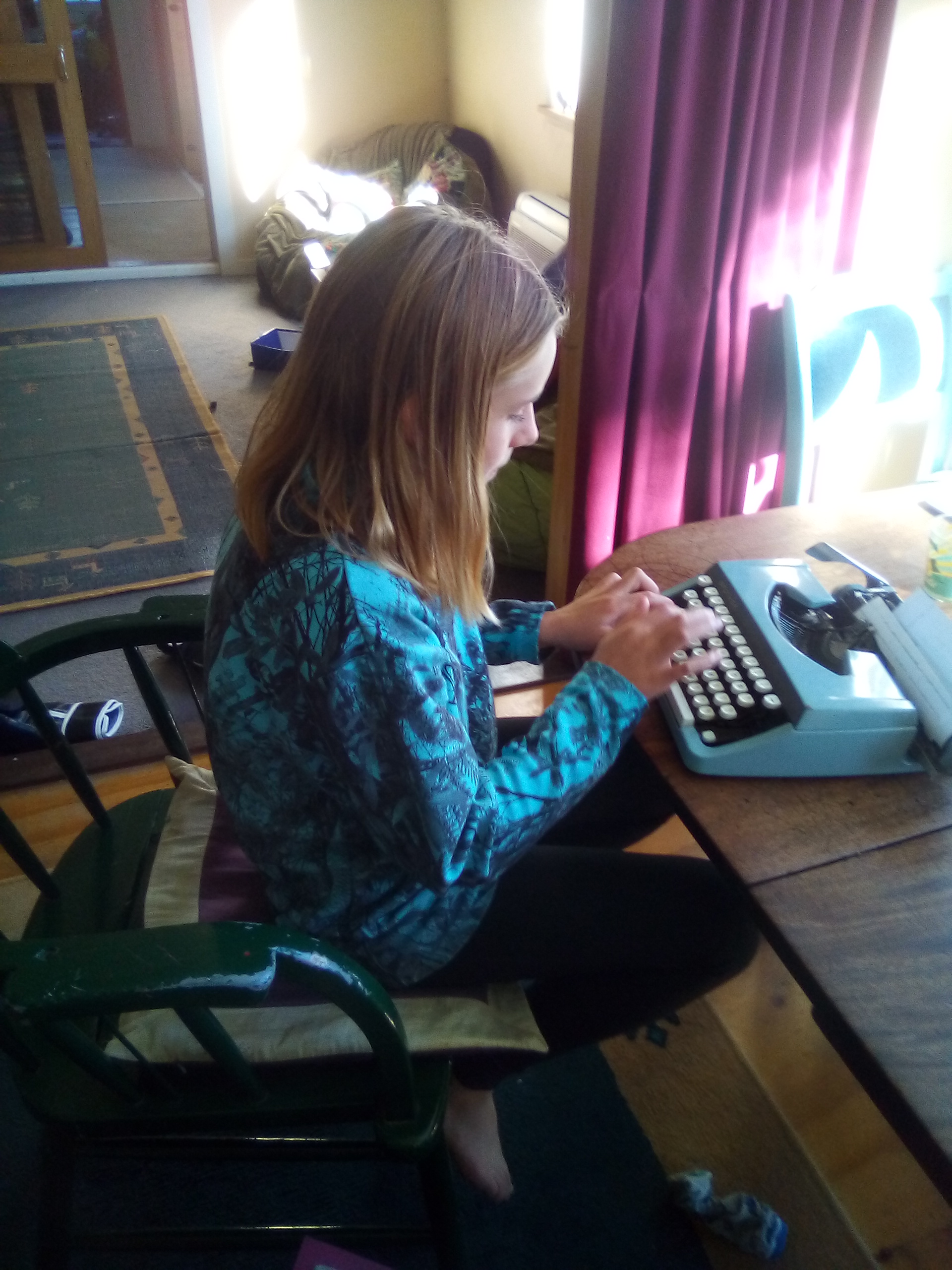
The grandkids are here for the holidays and Wendy at Red Books lent them an old portable typewriter in working order, ribbon and all.

Immediately the ancient sound filled the house, as the digital world, with which they can often feel obsessed with, and addicted to, disappeared. Here was something simple. You press a key, an action occurs involving a key pressing an inked ribbon against paper and making a visible letter which you can both see and touch. There are no screens and Google is not involved. Nor is your work stored on some server in Arizona.

Lily began writing a story about a girl who sees a ghost in an old house. Tap, tap, first page done, onto the second. That night she read the story she’d started and I could comment and discussion begin as to why a ghost hangs around – the life disturbance that is involved. A bit of an argument, the boy listening intently. She stuck to her guns, so did I. Nanna commented that this is a part of the writing process and I bring in the concept of the reality check. More tap, tapping then to bed. She wants to sleep on a sofa – her brother sleeps on the other one. Sleeping on your own can feel creepy sometimes, she says. A sort of whareiti has been created. The typewriter stays on the floor.

In the morning they’re back on the typewriter, the physical act of typing somehow very satisfying.  The boy is often aggressive first thing in the morning so we get out the boxing gloves. To have his aggression matched leaves him with a puzzled look. The tap tapping continues. I explain carbon copies and the gestetner machine. I’ve never seen her this involved and I begin to wonder, Have we been totally sold down the drain by Google, facebook, zoom etc.?

Dean

Easter Saturday saw the unveiling and memorial gathering for Dean Parker; family, friends and colleagues being able to finally express their aroha for this much respected playwright and activist − some would use the expression cultural worker. There were many tributes and on the journey home I reflected on the occasion. In the midst of an overwhelming feeling of solidarity, there was nevertheless a certain discomfort, almost embarrassment at the fact that Dean, both in the UK and in New Zealand became for a period, a member of a communist party – a card carrying member as they used to say − rather than merely a sympathiser. What was the meaning of him doing so, as a writer, even if, after a period, he left? Having been similarly a member of a communist party – in my case I didn’t leave, rather the organisation folded − the matter interests me.

To be a committed communist means, firstly, that you share the belief in the working class taking over, sometimes violently, the means of production of a society. There is no accommodation with capitalism. The means to the takeover vary, from a syndicalist alliance of co-ops, unions, community and rural organisations replacing the state, to the Leninist version of an advanced proletariat, with the party’s guidance, taking over the state apparatus and using that as a means of taking control of production.  There are other variants: Mao’s emphasis on the peasantry; Fidel and Che’s guerrilla interventionism, but it is a totalising belief, rejecting mystification and compromise.

And having joined, what is the creative worker’s role and how does the party discipline – once an analysis has been worked through of, for example the women question or the national question, collective commitment is required − how does this commitment affect the content of a work – or the form? The creative process and the creative worker are unreliable in this regard, story and characters assuming a life of their own and the writer usually going along for the ride.

And then the creator has to grapple with the issue of the mode of production. Is she going to produce works with the correct line for the middle class audience characteristic of most of the art forms, or try and take art to the working class in their own venues? If so, how does the latter happen and who pays for it? Is the creative worker in capitalist society a worker working for a boss or is she someone who has independently produced a product which she is then selling to an outlet; or being guided by an intermediary (agent/publisher/producer). Are they then working for the theatre or simply selling something to the theatre? And how is the price determined? Or is it a co-op of actors, writer, director, designer producing the work? How are the shares determined? The closest we get to a binary worker-boss relationship would be writing for a soap opera, in which case is a union required? And finally, what is the role of the private or state patron – sometimes both – and what is the relationship with the worker?

Complex issues, which, being a party member, creates some clarity and often a whirlpool of contradiction, for does the party have an analysis of these issues? Unfortunately, in New Zealand anyway, that has often been unlikely. Dean experienced this complexity and it informed his work and his career, And that energy rubbed off onto others. It would be a grown up moment for NZ theatre for a biography of Dean to be written within this framework. That is one task. Another of course would be the publication of a collection of his best plays with a lengthy and conscious introduction. We’ve done the praising, and in many ways, that is easy. But the real challenges remain.

And finally there is the wit to keep alive as well and it seems to me the Bloomsbury nights could continue as an annual event, someone putting together moments from Ulysses with short extracts from Dean’s plays, plus some songs.

Let’s keep the praxis of Dean Parker – that’s the task.
Te Kore

The Auckland Art Gallery is, at the moment, given over to Maori artists. A few classic European works linger − as artefacts of a marginal culture. The situation of the 1960s and 1970s where a few Maori works would have been shown on the margins of a predominantly Pakeha collection is neatly reversed and a Maori cultural hegemony exists. We see, quite possibly, the future Aotearoa.

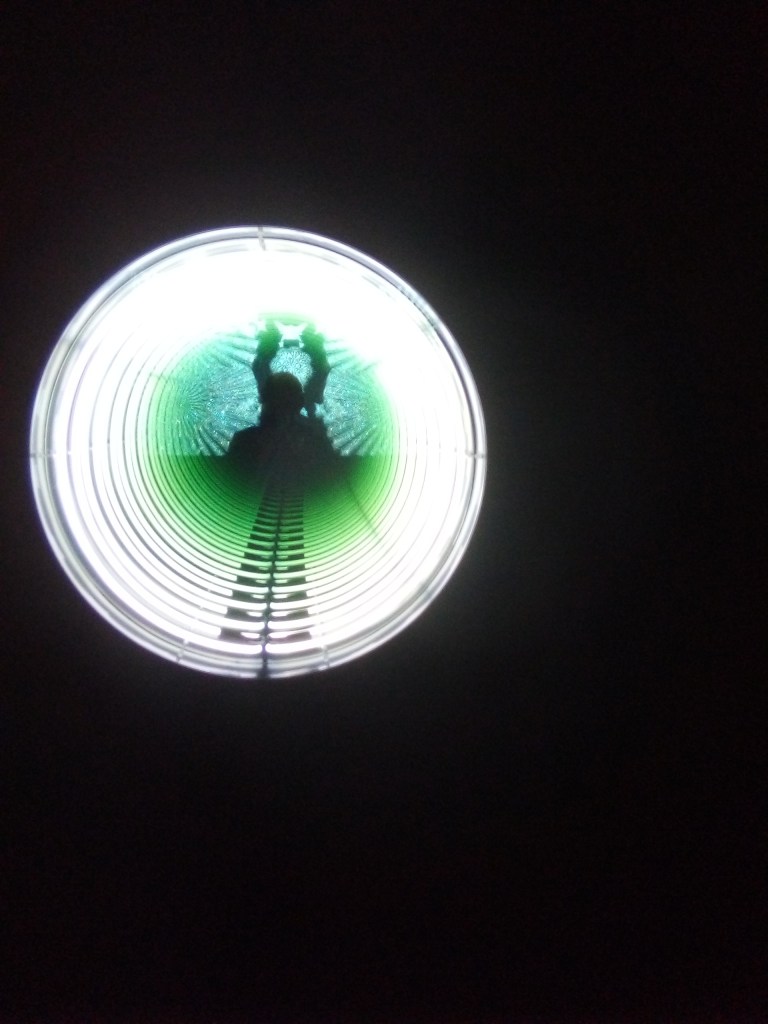
The centrepiece is a collection of work by Peter Robinson called Te Kore, which investigates the nothingness of beginnings, from which Te Po will evolve and then Rangi and Papa follow. The void is a resonant concept, encompassing both myth and science – the big bang, dark matter and so on. Light and dark feature with neon coils leading to nothing other than one’s own reflection; a piupiu woven with the thin wires found in the old telephone cables is beautifully lit, a flattened staircase in a mirror glows – it is powerful conceptual art.

Thereafter there is the Toi Tū Toi Ora: Contemporary Māori Art exhibition, a pot pouri of images, some craft, some protest art, some sculpture, some pottery… As I wandered I realised that this is religious art, repeating, as Christian art does, key stories and themes. For Christianity the virgin birth, the crucifixion, Lazarus; in this case, the separation, the children, the waka, whanaungatanga, whaikorero… In this context Robyn Kahukiwa is a major artist, for she brings the realistic human form to this religious content, in the same way as the Renaissance artists brought the realism of the human form to the previously ascetic symbolism of medieval art. There is a digital attempt to capture the physical presence of the demigods, which is both muscular and curiously coy in its hiding of the sexual organs. The careful drapery of some European art is repeated. Is there, more generally a lack of sensuality, a puritanism revealed? Similarly, other than reliefs devoted to Tangaroa there is a surprising absence of the natural world in this collection. Nevertheless, this is a major exhibition, an indication of a new normal.

But there is an issue, for a tedium begins to be felt, the tedium of religious art, which is in essence, prehistorical. Man has not yet become subject to the historical narrative and the complexities of economic, social and cultural journeys taking place dialectically, revealed by a consciousness which refuses religious certainty. This tedium could become a cultural issue mirroring the self satisfaction of the Pakeha ‘God’s Own Country’ syndrome of the 1950s.

Blog at WordPress.com.

Up ↑