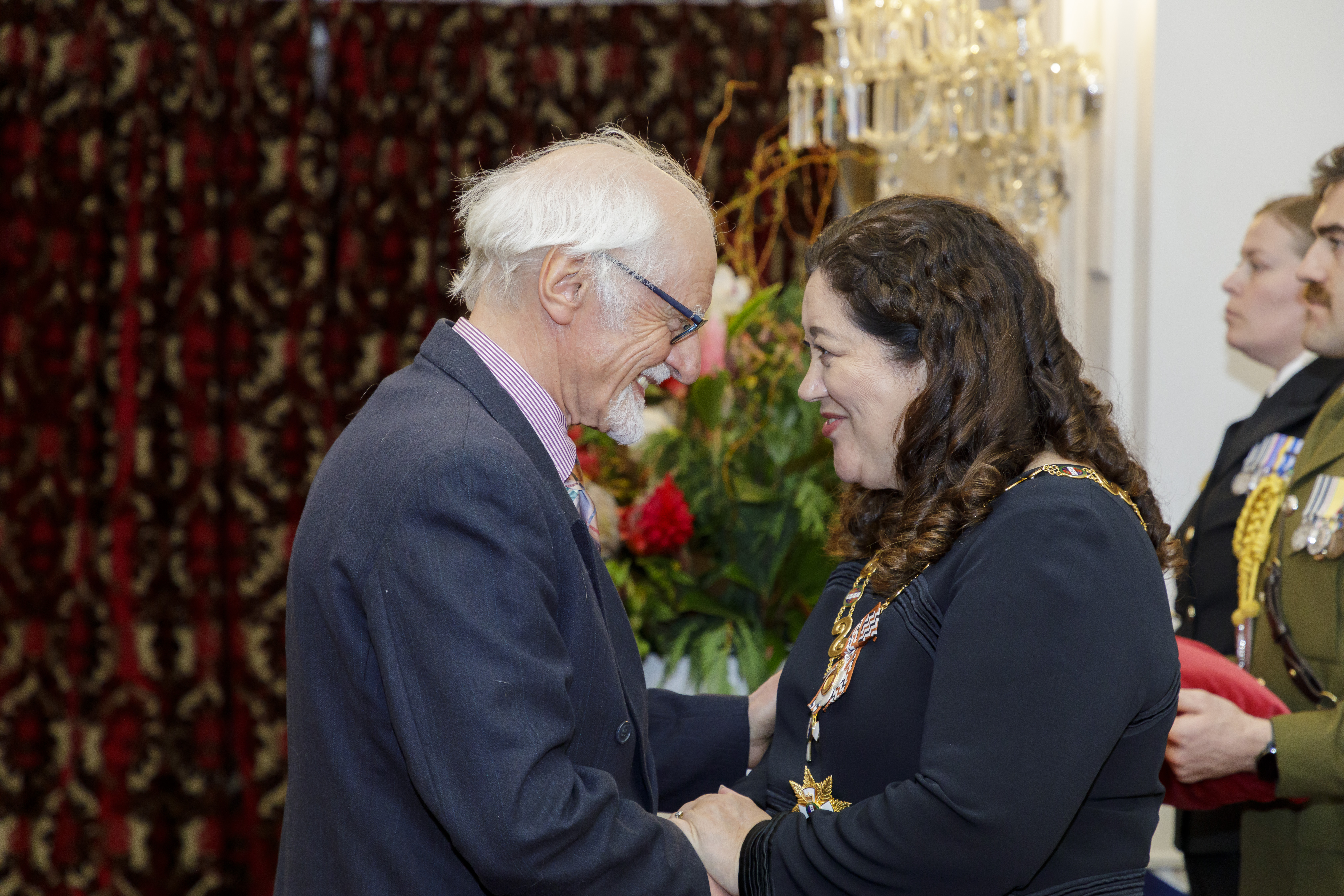
Attending an investiture was formal and grand. The ceremony invests people with attributes and qualities, giving them the dignity of worth and excellence. There are grades or ranks of these attributes and a citation to support the decision, which has been made by the warrant or the authorisation of the head of state, in this case the King through his agent, the Governor General. A medal is given to the recipient, plus a copy of the warrant. Letters appropriate to the rank can be used after the recipient’s signature and those of highest rank can use a prefix to their name (Sir or Dame).
It is a carry-over from feudalism, where inheritance of land brought power and authority over the people who worked the land, plus the delegated power of the sovereign in the local courts and in tax collecting. In return there were obligations to provide some infrastructure – roading, relief for the poor, medical services plus soldiers in the event of war. The common people had to accept the powerful person’s merit and excellence and here God was the ultimate judge. This meant that the church as interpreter of God’s voice came into the equation, which often generated some tension.
With capitalism, possession of money and that which money can buy, provides the guide to merit, importance and worth. Important people are wealthy and the poor lack merit. The working class sell their labour and their merit is a collective one expressed in the value of solidarity. It is a much more naked society and money, and the accompanying merit, can quickly come and go and be more generally contested.
The grace of the sovereign and his orders of merit giving worth and dignity is then a useful nostalgia to cloak the nakedness. In Aotearoa, there is, as well, an easy melding of this nostalgia with the Maori cultural renaissance, leading to a more democratic recognition of mahi and mana. The contradictions of king and church and feudalism still hover, but a more benign indigenous voice can be heard.
As a recipient I find there remains the discomfort of the singling out of this or that person, who has often been working in a collective, community milieu, and a singling out which depends on the almost accidental energy required for nomination by a colleague or friend with time and energy. On the other hand, the recognition of community activist energy, rather than the more normal tribute to those who have ended up in powerful positions in the judiciary or military, or to capitalist patrons, seems worthwhile.
Finally, a working class family felt proud.
 PO Box 2 Blackball
Leave a comment