Search

PO Box 2 Blackball

Paul Maunder's blog

Category

Uncategorized

A tribute

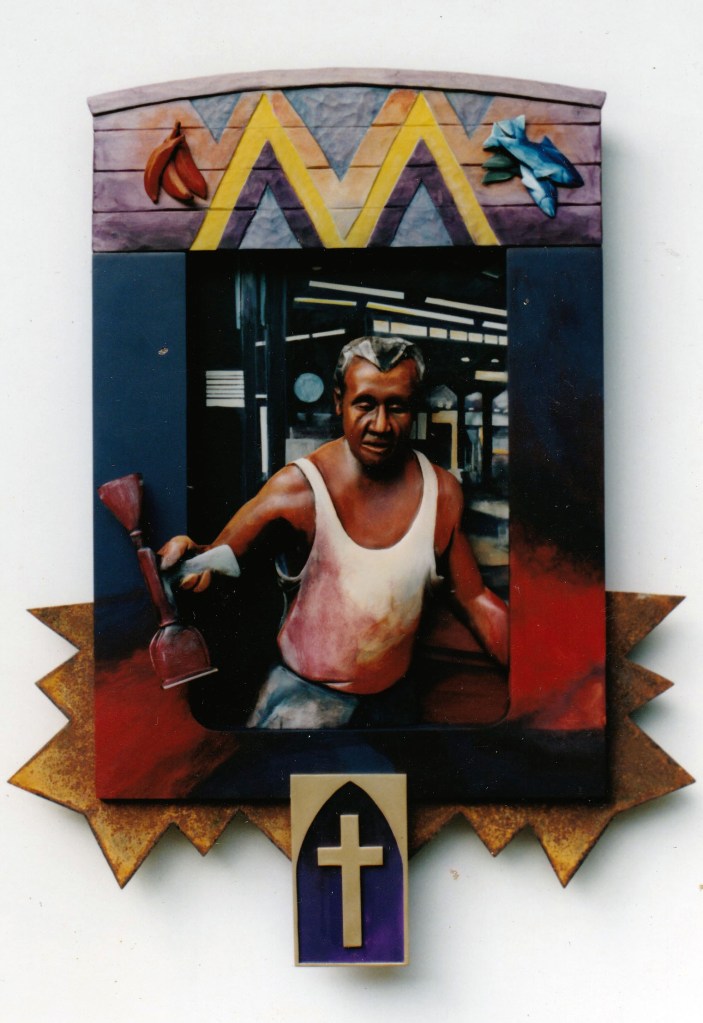
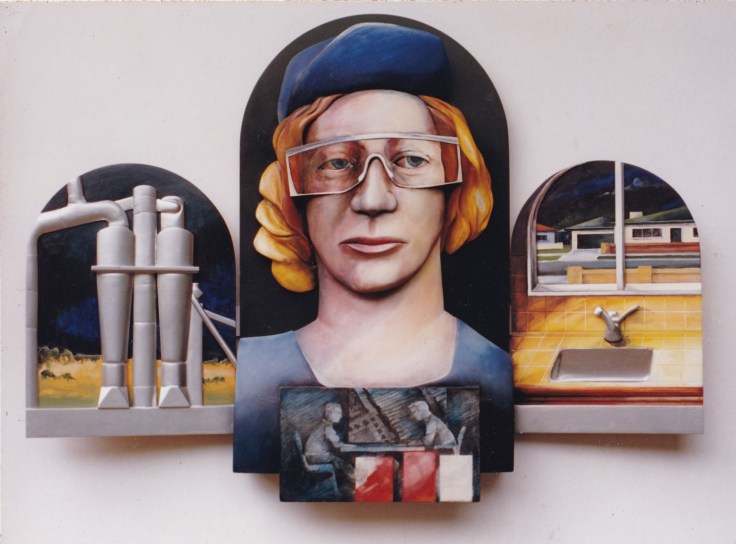
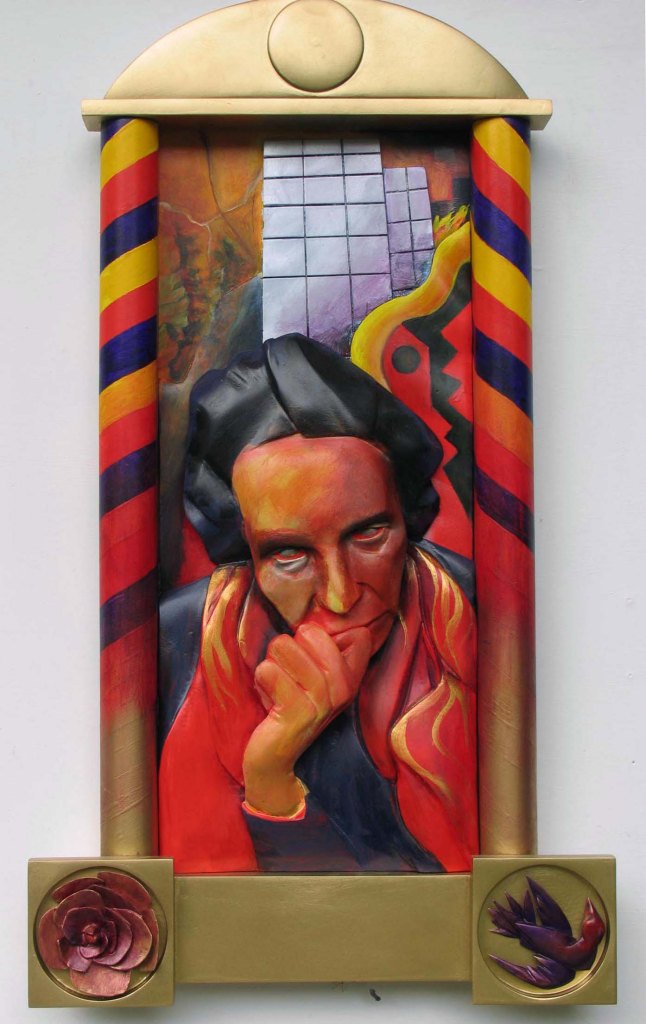
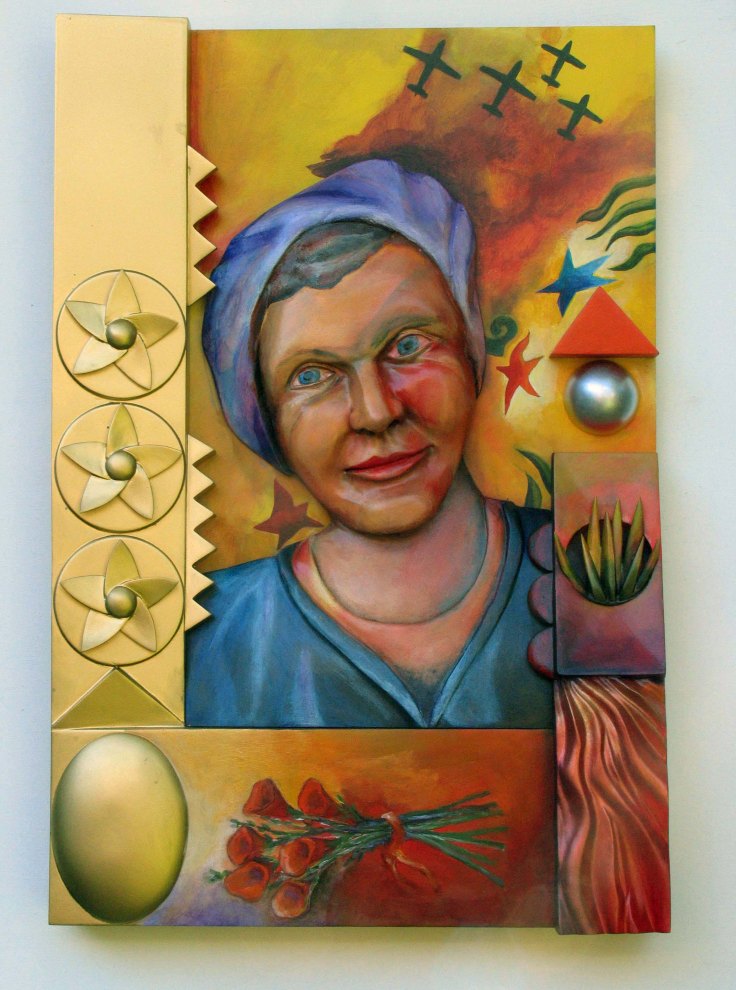
While in Auckland I stayed with Phill Rooke and his partner, Helen and I want to pay tribute to Phill’s work, for it is undervalued in the art world. Phill created the sculpture in front of the Blackball Museum by the way.

Phill’s work has always celebrated the physical process of the working person, that ability, past and present, to create and to alter, the physical world in which we live. Of course, the natural environment is the wider context in which this human physical creation takes place. As part of this paradigm there is the physical creation of the work of art; the sculpture or painting or drawing being the work of the artist, as worker.

Brickmakers 2

Polynesian brickmaker, from a community piece.

This celebration of process has a strong spiritual quality, a wonder and an awe, in the same way that the painting or sculpting of the nativity, as a celebration of God becoming part of the physical world, is filled with wonder and awe.

Lenard

Phill’s father, who was a worker and a communist

Rooke’s sculptures accordingly have the physical shape and presence of the ikon.

Kathe Kollwitz at the mill

A mill worker

But, of course, while the working person creates and alters the physical world, under capitalism, the fruits of his or her labours are owned by the capitalist, and this is the source of the revolutionary impulse. In the same way that Christ was rejected and his physical presence murdered, this also being the subject of religious art, the worker is alienated from his or her work. There is a resonance here for Rooke; a tension and knowledge that underlies his work, with the natural world often echoing this tension – birds as well as symbolising liberty have the paranoia necessary for survival.

SCW Le Pas

La Passionara, the celebrated activist in the Spanish Civil War

When Rooke moved to New Zealand in the 1990s he widened the celebratory aspect to the worker having made and still making, the community in which his work takes place, in some ways mirroring the way those early Christian communities were made. Accordingly, he constructed icons for community centres and public places.

The paradigm behind Rooke’s work inevitably involves a critique of the art world, which celebrates subjective, individualist ‘works of genius’, which then become a commodity for the investor. Art is privatised, with criticism a reading for the market, and the creation of importance being a part of marketing. This extended into the cold war, with abstract expressionism, as a movement, being funded by the CIA in an ideological battle against the social realism of the USSR. This has morphed into post modernism as the culture of neoliberalism or late capitalism. Diversity leads to the need for niche marketed commodities, both in the shopping mall and the gallery.

SCW Nurse Una

Portrait of Nurse Shadbolt, a NZ nurse in the Spanish Civil War

In this global cultural narrative, it is easy for Rooke’s work to be marginalised (Marxist, religious and community oriented), a nostalgia, in the same way as the worker or the working class are seen as nostalgic concepts. Yet that is simply untrue. Anyone who works with or closely observes a builder or plumber or sawmiller or digger driver or gardener at work will see the pride that remains, the pride of making or healing a house or making a road or cycleway or landscape, the pride in making the world a better place. But the tensions remain of who ultimately owns the results of the work.

Accordingly, those basic physical processes that Rooke celebrates, in his icons, is a necessary reminder of what is at stake, both materially, socially and spiritually.

Hanging out in Auckland while Winston decides

Can I hear the birds? Yes, I can hear the birds and the distant rumble of the traffic- cliché- roar, hiss – it’s there, like the homeless and the rich in the houses around me, swimming pools in every backyard. Who will Winston go with? Winston and his cabal of nonentities, that’s what the press call them. The press are pissed off, for Winston’s controlling the story. That’s what power’s about – who controls the story. I miss the mud and the kereru.

A restless night and still no Winston. I go for a bike ride, braving the traffic and motorway crossings to check out the worth of a classic Leica I bought in 1968 and which sits around in these digital times. Cosmetic damage makes it relatively worthless, so I’ll keep it. Classic has to look nice.

Later, I sit in a traffic jam in order to get to First Union’s offices in Onehunga for a commemoration of the centenary of the Russian Revolution with the union and the Philippine Solidarity Committee. A blast from the past as people discuss the shape of the world – doesn’t happen much anymore. Home to a programme on Aljizeera about the carbon market and the turning of nature into an investment- that being the only way to tackle climate change according to the money men. A few rough looking people disagree with the corporates who are controlling everything. Finally, a stand up transvestite comic takes the piss.

Still no news. Go into town to see the art gallery and the homeless. I realise this is a city of castes: the elite on their yachts, the middle class strutting around the inner city suburbs, the tourists arriving on cruise ships, all those working with their hands have brown faces and high viz jackets, and they are now joined by the new caste of the homeless with their sleeping bags, their scraps of cardboard, their scribbled signs and their op shop clothing worn by the weather. The art gallery has pompous captions but some original Blake, Rembrandt and Goya etchings – originals speak across the centuries.

Finally, the man speaks. There was talk beforehand of Winston wanting to leave a memorable legacy and that this was a key motivating factor. If so, he has succeeded, for in announcing his decision to go with Labour he stated clearly that the main reason was the fact that capitalism, as currently practised – that is, actual lived capitalism – is not serving the needs of the majority of people and that he wants to be part of a government that changes this. The new government is then, based on this ideological premise. Add the Labour/Greens judgement that capitalism is destroying the environment as well and it becomes a considerable intervention.

Winston’s legacy (hopefully) is to have been responsible for creating the fourth progressive government in post settler history, the first being the Liberal Government of 1894, the second being the 1935 Labour government, the third being the tragically short-lived Labour government of 1972. All shared that ideology. It is interesting that they seem to occur at 40-50 year intervals. But we also have to accept that this was a team decision by NZ First caucus and board, a variety of ordinary people rather than professional politicians.

And of course, this government will have a very strong Maori caucus. Thank you, Winston, for silencing, for a moment at least, the mantra that there is no alternative.

The next day a train trip to Manakau, uncovering those with the fixed look of the survivor, the overweight with bad complexions, the elderly woman talking about her husband with Alzheimers, the student trying to hope, past the suburbs with acres of warehousing, the tangle of motorways, the crowded housing of the poor and nevertheless, the good humour of Polynesia.

The new government is already getting buried in the digital noise. Politics takes place mainly in the media, who become an occupying army constructing games of winners and losers, the defeated Bill walking into the sunset hand in hand with his supportive spouse, the new leader on the front pages of the world’s press… The support team is joined by the makeup artist and ordinary people form the cast of extras. Like climate change it can seem unstoppable.

Today I fly south to the open spaces, to smaller local tasks, to walk in the beech forest, to try and negotiate with a council planner, to an environment where there is space, some gaps in the noise, where moments of silence are possible, to a place where the ancient patterns can still be detected.

Hamlet

Kiwi/Possum Productions are going to have a go at Hamlet next year, making a change from local issue-based plays. It will be another learning curve for the group and interesting to see the response. I’ve directed the play before, the last time in the late 1970s, with Jim Moriarty as Hamlet and Don Selwyn as Claudius.

It’s been interesting to start working on the play again, to do the necessary edit – five hours is too long in the age of tweets. Immediately, the psychology kicks in: the melancholy, the cynicism, the irritation at oneself for a lack of action, the suppressed fury. Hamlet was of course, an intellectual, a student, with the need to act when faced with a rank injustice. Instead he started to play intellectual games, theatrical games, pretending to be mad, toying with suicide and so on. Behind this an unresolved Oedipal complex – his father remains a hard taskmaster. His mother’s fallen for a Trump type figure. The play bites quickly and deeply: There’s something rotten in the world today, what do we do- endlessly complain? Perform theatricals? Pretend to be mad?

And the problem of goody-goody Ophelia, or is she too playing games? Has she already slept with Hamlet? Jean Betts wrote a play exploring this, a piece which still gets regularly performed in schools.

But above all, I become yet again overwhelmed by Shakespeare’s extraordinary writing, the ability to conjure phrases that have become immortal: There’s something rotten in the state of Denmark; One may smile and smile and be a villain; To be or not to be; Alas, poor Yorick; This goodly frame the earth; The hour has almost come when I to sulfurous and tormenting flames must render up myself;  This majestical roof fretted with golden fire; Sweets to the sweet, farewell. He was amazing. Yet pretty mediocre when it comes to plotting a story (and the story was borrowed). It gets creakier as the play goes on. Hamlet setting off for England- how the hell to get him back on stage? And then a rather silly set up of a duel to get everyone killed. But we forgive for the divine writing.

There have been various interpretations as to the richness of the imagery. Elizabethan England was a time when feudal society was transitioning to capitalism and its accompanying individualism. Under feudal/tribal societies the mind is akin to a totem pole of imagery,  together with access to a collective pool of stories. Think powhiri with whakatauki, whakapapa and tribal memory to call upon. It leads to fluency. Whereas the individual analytic mind destroys this detail; the oral story being judged anecdotal, of limited truth. As a consequence, the totem pole falls into disrepair.

I once filmed a series of interviews with Tokelauan people on issues facing their community. As I recorded these interviews (which were in Tokelauan), I was amazed at the fluency – never a pause or an ‘um’. But then I realised that the interviewees were not analysing the issues, but regurgitating received opinion. Fluency comes at a cost; as does analysis.

The last time I worked in a Shakespearian context was in Poland at an encounter led by one of Peter Brook’s actors. We were exploring father/daughter relationships in Shakespeare’s plays. There were people from a variety of countries and it seemed best for each to speak their native language, rather than try  and get their tongues around Shakespearian English, so each scene came to be performed with the characters speaking the text in a different translation of the original Elizabethan English: Lear-English; Cordelia-Yiddish; Goneril-French, etc. The result was rather wonderful, Shakespeare’s masterly language penetrating the languages of the world and telling a universal story: an old man stuffing things up. A pity there wasn’t a Zimbabwean there to complete the picture.

The intricacy of inequality

Workplace Relations legislation is important. The details can bypass the ordinary citizen, but changes reverberate.

Here’s an example. A new company has taken over the Grey District Council’s rubbish collection, recycling and landfill operation contract. The previous contractor was an Aussie cowboy outfit looking to get a toehold in New Zealand and in order to do so, tendered too low. Council thought they were getting a bargain, but there were endless problems: equipment breakdowns, staff not paid on time, not meeting outcomes…the parent company went broke and the NZ offshoot was obviously heading the same way. The Council found an Auckland-based company to take over the contract, but something had to be squeezed to make it viable. Labour costs were the only available option. Here’s how workplace legislation brought in my National enabled that to happen.

The previous Labour Government had brought in legislation that forced a new contractor in low paid sectors of the economy to take on existing staff at the same rates of pay and on the same conditions. This stopped the precarious, low paid and vulnerable cleaners, catering staff and the like from being endlessly squeezed by the contracting out process. (Boss: ‘Sorry, Teuila, I can’t pay more than the minimum wage because if I do I won’t win the contract and then everyone will lose their jobs. You understand?’) National changed that legislation. If there were 19 or less staff involved the law no longer applied.

So, the new contractor in Greymouth sacked all the existing staff and asked them to reapply for their positions – and to take a wage cut. If they were re-employed they were covered by the 90 day legislation that National also brought in, which enables the employer to dismiss an employee within the first 90 days – without giving a reason. Because of the previous issues, some of the employers had joined a union and even held a picket. The new contractor is anti union and gave these employees the sack.  He could do so because of the 90 day law. There won’t be any collective bargaining taking place on this work site, and collective bargaining is the proven way to get better wages and conditions.

Mission accomplished: labour costs down, potential troublemakers expelled, workforce bargaining power weakened. No wonder we have a society of growing inequality.

And the Council? Well, this is not a governance matter, this is management. The councillors, who are elected and could have pressure brought to bear, have no role to play. The mayor tried to intervene and was told to shut up. The Council staff belong to an in-house or ‘yellow union’, negotiating with the CEO, who is of South African origin. So much for good old West Coast working class heritage: ‘We don’t take any shit down here.’ Pull the other one, mate.

Members of the NZ Taxpayers Union are laughing all the way to their gated village.


Congratulations, Theo Spierings

photos: Stuff.co.nz

We read the statistics regarding child poverty: 1 in 4, 300,000, that sort of thing, but what does it mean – even for those who aren’t going to school hungry or living in cars? What does it mean to be seriously under-resourced and stressed and how does it happen?

A relationship doesn’t work out. Immediately the formulas kick in: one for the DPB, another for the accommodation supplement, another for child care, another for child support – this one ensuring a toxic relationship continues into bitterness and often a desire for revenge. When circumstances change, the formulas have to be renegotiated and there is always a time lag. With the increase in precarious work this becomes a constant, daily battle. This is compounded if there is a major expense or a normal life crisis: a rotten tooth,  the death of a family member or something wrong with the car. There’s pressure to work, but will that work coincide with school hours and school holidays or does after school care need to be found?

These are still young people who need some social life. If families are not there or unsupportive, baby sitters have to be found, and paid. Otherwise, there is no respite from the 24/7 of providing for the needs of children. And children get sick and children get careless. It is reasonable to occasionally wish they had never happened and regret that the best portion of an adult life is lived in relative misery. Of course, love wins out, but occasionally the resentment must be felt, plus the accompanying guilt. Meanwhile, the battle with the bureaucracies continues. With the increasing ease of ‘dobbing in’ the Ministry for Vulnerable Children might start sniffing around – the Ministry is largely a surveillance agency based on hypocrisy: how can a state that creates vulnerable children rescue them? A job opportunity which might provide some satisfaction means you’re not home at 3pm. The child care occasionally breaks down and the kids are left alone. Meanwhile, in the talk back ear, you’re a bludger, a burden on the taxpayer and in need of micro managing by the state.

It’s a situation where having children is damaging to all involved. Of course, that’s what they want. In the old days, the mother had to adopt. Nowadays you suffer differently, but the intent of the suffering is the same: Take that, you slut. And when people are under-resourced and subject to social revenge, there are under-resourced children who don’t cope with the stresses of adolescence. Living in poverty means the random wash of the digital world is attractive and addictive. The cycle begins again.

And meanwhile the CEO for Fonterra, Theo Spierings, gets $8 million annually. It is not questioned. There is no surveillance involved.

In the wider view, this is about the working class being reproduced as cheaply as possible. And in this case it is providing the bulk of the disposable workers for the precarious occupations. Of course it’s not as bad as the Filipino women leaving their children at home to serve the wealthy matrons in Dubai or London or Rome or New York, but it is the same pattern.

Unfortunately, a change of neo-liberal management, even a resolutely positive one, is not going to fix this issue. It requires a revolution.

In another  space, this is interesting: http://upsidedownworld.org/archives/venezuela/rumbas-in-the-barrio-personal-lives-in-a-venezuelan-collectivist-project/

Theatre of the absurd


The final leaders’ debate was a strange affair, dominated by the set, a monstrous rostrum affair, like something out of a theatre of the absurd play, perhaps symbolising how the importance of ‘the leader’ has grown out of all proportion. Suddenly, that’s all we have: leaders with a mass following. A dangerous syndrome.

Jacinda Adern, after promising relentless positivity, had a melancholic air. After all, National had waged a relentless campaign of lies: there was no fiscal hole, there was no raising of taxes, the tax on irrigation is token, the capital gains exploration is to find a best practice solution to a dire and complex problem (a population having a roof over its head), to deny foreigners the right to purchase property is common practice in many countries, especially small ones where the possibility of the nation’s fabric being sold is real. All these were lied about and a paranoia created. It was a move toward a US political culture with campaigns based on lies and invective. Camus wrote about the Spanish Civil War: It was in Spain that men learned that one can be right and still be beaten, that force can vanquish spirit, that there are times when courage is not its own reward. It is this, without doubt, which explains why so many men throughout the world regard the Spanish drama as a personal tragedy, (Preface to L’Espagne Libre, 1945). It is possible that this election could be a scaled down tragedy for this country.

Bill English, who can appear a likeable enough bloke in some settings, wore a strange, sickly, embarrassed smile, like a crim who’s got away with it. For if the Nats get away with it, it means the democratic right to govern is based on fraud and manipulation. It was, accordingly, a programme where the advertisements in the breaks seemed meaningful. Those absurd invitations and promises made by smiling idiots, that if we acquire some object or machine, we will enter nirvana, were the reality of the system we live under.

What are the options for the voter? To thoroughly research and fact check? Some manage that. Scoop for example, published research on the dairy-farm water question. Here are some facts. Dairy farms use as much water as 60 million people and have the environmental impact of 90 million people. There are 12000 dairy herds using 4.8 million cubic metres of water, but of those farms, 10,000 (80%) do not irrigate so would be unaffected by a water tax. Of the 20% who do irrigate they would be faced with an annual bill of $10-15000. And of those, there are a few mega farms run by corporate interests. They are the ones who would be hardest hit. And fair enough. This research is hardly front page news. It’s the truth but the truth is dangerous to the class interests that the Nats represent. So, what was going on in Morrinsville? More theatre of the absurd.

As a child, I could never figure out why my adopted father was so anti Labour, when his experience of the world as a working man aligned him with the party’s agenda, until I came across a 1935 election poster showing a red, communist monster clutching at the family home and the attached wife. Message: the reds will take not only your house but force your wife into becoming a slave to free love. Fred had bought into the message. As Chris Trotter pointed out in one of his better columns, nothing has changed. The Nats and the farmers and the business people believe they are born to rule and the rest of the population are a dangerous and recalcitrant rabble and don’t let them organise.  You can no longer beat them into submission but you can befuddle and scare them.

So, there was reason for Jacinda to feel melancholic. If you are created by the media as a necessary story for what was promising to be a dull election, then the next media story is your downfall.

Maybe she should have turned up to the debate with a balaclava and a bandoleer?

Zapatista

The daffodils appear

The daffodils appear, beautiful virginal children. There’s a patch on the museum site which never flower. Each year I avoid mowing them for a month, then run them over in frustration. Gaynor put me right. ‘Wait for them to wilt and turn brown before you mow them. You can hasten the process by gathering clumps of stalks together and tying a knot in them. Then, next season they’ll flower.’

P1060376

Some balmy days gladden the soul. The blossom trees are blossoming, the first shoots appear on the apple tree, the willows have budded, the chooks are laying and kereru flop heavily from a tree as I walk down the track to the creek.

As I watch the leaders’ debates I realise again that when both sides are managing within a neo-liberal capitalist framework, government is as much about spirit as about policy. National, as led by Bill, are mean-minded, punitive and puritan ‘realists’. Labour, as led by Jacinda, are youthful, warm and want to be generous. National increasingly micro-manages those at the bottom. In their view, the dysfunction is their own fault. It’s time to insist that such people haul themselves up by their bootstraps, to start having goals, to get their kids meeting national standards, to wipe out the gangs and let the riches trickle down. Labour sees that the stress of poverty causes dysfunction. Behind Labour is the old socialist slogan: A better world is possible. For National the better world is here, you just have to persuade everyone to get it together enough to clamber onto the first rung of the ladder.

National aren’t great on smiles and they give me the creeps. Who would want to be mothered by Paula Bennett or Judith Collins? Or fathered by Steven Joyce or Bill?

Somewhere, lurking in the shadows, is the monster of climate change, towering over this family argument. No one dare mention it. It certainly hasn’t come up in the debates so far. Bangladesh and parts of India are under water; Texas is flooded, California and Spain are burning up, the sea level rises, Hurricane Irma… in this context generous or mean spirits are a laughable matter. The poor old Greens would like to bring it up, but they don’t want to be seen as negative. Metiria touched on a negative reality and got burnt. Negativity doesn’t win votes. So let’s love New Zealand and hope to hold on.

Down by the creek I find the perfect rock on which to stand and do the exercises. It allows a renewal of technical energy.

You can’t mow down the recalcitrant daffodils. Let them fall and wait a season.

Finally, If you really want a spiritual uplift watch this video based on a song and photos from the Spanish Civil War. https://www.youtube.com/watch?v=aXV2P5eeV5c


Theatre and performance

Reading the biography of Sue Bradford, and it’s a good read, left me pondering on the difference between performance and theatre. In the modern world the demand for performance is pretty universal, and the higher the importance ladder a person climbs, the greater the performance demands. Sue is a performative person and I wondered, reading the book, how much performance, more generally, is driven by the Oedipal complex. Her performance evolved from Progressive Youth Movement activist, to drug taking hippie, to communist, to community activist, to politician, to academic, back to community activist, to radical intellectual…and there were parent and partner  roles to play as well.  It’s an admirable and coherent ensemble of performances, emanating from the bosom of a middle class family.

37. Pou Mahi a Iwi. Sue Bradford in the Unemployed Roadshow, 1996.

Sue Bradford in the Unemployed Roadshow, 1996.

When I worked with Sue on a theatre project in the 1990s, I suspect she found theatre a bit of a puzzle, a puzzle because of the dialectic that is at the heart of acting, as opposed to the certainty required in performance. Let me explain.

The basic acting mantra was succinctly expressed by the Russian master, Stanislavski: If I were this person in this situation how/what would I feel/think/do? The ‘If’ is crucial, because it requires the imagination. I’m not Hamlet, but if I were Hamlet in this situation (a rotten state with a usurper king) what would be going on in my head and heart and what would I do about it? The play states what Hamlet does and what he thinks and feels, to an extent – but there are still immense subtleties to be created by the actor bringing to bear his own experience of like situations. For example, in the ‘To be or not to be’ soliloquy, Hamlet contemplates suicide, but to make it ‘real’ the actor has to bring his own knowledge of contemplating suicide to the scene. The actor will experiment with past situations that might work; which memory of despair? And then, in dialogue with the director, intuitively choose.  For one works better than another. From that comes a score of physical movement. Hamlet slowly unfolds. And in becoming another, the actor becomes more himself.

This I-I dialogue is at the core of acting and is more complex than the politician performing the role of him or herself as politician; the key to that performance being the casting aside of the doubt that imagination produces. Doubt and imagination are fatal for the politician, and for other performative roles: real estate salesperson, talk show host etc. Accordingly, as the 21st century becomes increasingly and noisily performative, this I-I duality is banished. In many ways the imagination and the doubt from which imagination emanates, are banished, to be replaced by public opinion polls, sales figures etc.

This perhaps goes some way to explaining the extraordinary increase in suicide, especially amongst young men. Their tendency to become attached to the screen, to play those games, means both the performance is a solitary one and the I-I breaks down, for the screen can never be an I, despite its promises. It is a series of digits, that’s all, colonising the imagination. When doubt hits, it must overwhelm.

When I think back to previous cultures, perhaps God was once the other ‘I’, providing a dialogue. Or was it that performance was a matter of birthright, reserved for the aristocracy, the peasant simply tilling the soil? And here, there remains continuity. The performance of those who work with their hands lies in the work of their hands: the builder, the mechanic, the road maker, the digger driver… Sure, there’s greater help from the tools but there is still a physical object to have a dialogue with. The I-I (or is it I-it) prevails.

In this way the old class paradigms remain intact.

There’s probably more to say on this issue, some of it to do with the Oedipal pattern and how that’s changed as well, but I’ll leave it there.

Heroes and thieves

A nasty cartoon-poster appeared in a local shop window attacking Metiria Turei: ‘When the left needed a hero they got a thief’ read the slogan and I suddenly realized this whole episode has revealed the sub- fascist side of things that can appear as an underbelly of NZ political culture, with beneficiaries a hated marginal minority supposedly ripping off the system and needing to be punished – not too distant from Aryans jeering at Jews forced to scrub footpaths.

beggar

photo: radio nz

The persecutor-victim-rescuer dynamic has been at the heart of this story: Metiria set herself up as spokesperson and example of the beneficiary victim, thus inviting persecution. She got that alright and then needed rescuing by the left. But meanwhile, family members felt they’d been, in turn, made victim and therefore needed to persecute in order to rescue themselves. The newly energized Labour Party also felt persecuted by the whole episode and needed to rescue themselves. On it goes. The Greens should of course be familiar with the dynamic: after all, the planet is victim and needs rescuing – that’s core business.

It’s actually a terrible pattern, for it keeps on spiraling down – ending up in ethnic cleansing and death camps.

In human interactions the solution is simple: adult negotiates with adult and in this instance the adult position is clear: Every civilized society has a benefit system to ensure subsistence to those who cannot gain satisfactory paid work: the unemployed, the disabled, the solo parent, and the aged. If there is no system or if the amount is insufficient, these people are stressed, leading to dysfunctional family situations, hunger, violence, crime, kids unable to learn, prostitution etc. The facts are there. The only question is, having known for thirty years or more that the present regime provides insufficient benefit levels, why, as a society, we haven’t taken steps to alleviate the stress? When research shows clearly that we should do something, we don’t do it. Why do we persecute these people?

Metiria tried to dramatise this situation and failed, perhaps not failed, but it wasn’t a good outcome, as a sort pf martyrdom followed. Is there an adult on the other end of this negotiation? Unfortunately, no. And that’s the real problem. The persecutor remains adamant. It will probably take the Universal Basic Income to disappear this persecutor, to put in place an equable regime of subsistence, rather than rags to riches stories, crime stories, celebrity stories, the usual lies that people are fed.

When it comes to the planet as victim, the dynamic is complex, for the planet doesn’t care, even if it became a barren rock flying through space. Caring requires consciousness, so this is actually a people to people issue. Are we prepared to make the sacrifices, the adjustments required to stop further warming or are we going to create millions of victims, who will then persecute us by becoming refugees, boat people, terrorists, beggars? And who we then, in turn, persecute.

We know this, yet we do nothing much, for behind these dilemmas is an economic and political system based on the persecutor-victim-rescuer dynamic and the ‘there is no alternative’ mantra. When we need heroes we get thieves.

Back to the drawing board.

Blog at WordPress.com.

Up ↑