Search

PO Box 2 Blackball

Paul Maunder's blog

Category

Uncategorized

Melancholy

I suffer an attack of melancholy, triggered by the writing of an on-line will with the Public Trust, disposing of myself as property, including my corpse. The property is meagre and the corpse too old to harvest, but considering myself as property did put me in the dumps.

The Public Trust has become one of the increasing number of digital castles which make up the modern world. The castle is the algorithm(s) that make up the rooms, the gatekeeper is the chatbox. One inputs and out of the castle comes an output to be downloaded (upon payment) to one’s private digital holding – phone or laptop – the equivalent of the peasant’s strip of land from which one can harvest that which has been planted; some portion of which belongs to the lord.

Continuing to explore the metaphor, there are some commons such as Wikipedia and a noisy range of carnivals: facebook, twitter, spotify, netflix, youtube, games etc. Where are the cathedrals? Perhaps the news sites: stuff, the Guardian, RT, China News, Aljazeera, CNN… The Mass? The sports gatherings or is it pornography? – take this body… And confession is online banking. The lords and ladies? Pretty obvious.

The melancholy grows with the realisation of an increasing redundancy of a person with archaic skills based on presence, skills which are ossifying through underuse, plus the natural redundancy of old age – who really wants to spend too much time with an old man with a repetitious story to tell?

I understand Baxter’s urge to hang out with the marginal and try to build a tribe; to hustle the charitable and expose the mask. But he didn’t have the digital fiefdoms to contend with. Presence was still the game being played, even by spies.

As I venture forth

on a cold morning

the spin of poetry

provides a minimal warmth.

Strange symbols have appeared

on the village lampposts

branding the place I presume

or have we been invaded

by the Russians?

More likely more government

funding to attract the tourists.

The signboard on which

I write union news has been

blown over in a storm of wind –

another symbol – I will need

assistance to put it back,

its concrete feet are heavy,

but not heavy enough;

I imagine a drone arriving

with explosives.

Last night I read of automated

rifles in Gaza and the Israeli military

spraying shit over Palestinian homes;

it’s a difficult world…

But the dog is not fazed

as she Intently investigates

the scent of a recent piss.

On the road

Travelling to the ferry for Wellington I stay at a camping ground in a wine growing area. I usually stay there the night before catching the early ferry. It used to house some Northern kids on their backpacker holiday. They’d spend a summer here working for a contractor who provides labour to the vineyards. But now the place is crammed with parked up motor homes and caravans, plus a few old men living in cabins – otherwise they’d be homeless. The motorhome people have sold their house perhaps and need to pause, like those yachts people who wander the globe.  One of the old men tells me that the big contractors, who now use Pacific Island workers, have bought most of the local camping grounds and put in eco pods with solar panels for their workers, two to three hundred Islanders, who can lift a crop of grapes in a day.

There’s no cutlery in the kitchen. Why? It gets stolen it seems – the old man lends me a fork so I can eat my meal. There’s a surveillance camera, microwaves, fridges etc, but no implements.  In the morning, like early homo sapiens, I’ll need to find a stick or a concave stone. In the toilet block the local radio station is piped in. I’ll be home by eight, have to work late…sung to a calypso beat. There’s a dimly lit tv room and traffic on the main road busies past. This is an American level of alienation. Humbert and Lolita might be holed up here. We’ve finally made it.

Surfing the web I come across the Emergence Network, the star of which is a Nigerian professor who’s coined the term post activist. He argues that to challenge and protest is to recognise power and that we need to be more devious, like the runaway slave. We need to recognise the gifts of the South: the oral traditions, the gift culture…, rather than want the resources of the north.

A bunk, a communal kitchen

With the required notices

An old man with a stick

Blenheim FM in the toilet block

 An Asian flosses his teeth,

a French girl huddles in a blanket-

this is the realm of the homeless.

I see possible tragedy, Oedipus

stumbling in, imitating the slave

Fleeing the plantation, head bowed,

secretive feet…

I sleep slowly

The capital:

The election becomes a strange event as the governing team becomes dysfunctional, the bright sparks falling apart and doing questionable things, yelling and screaming and getting drunk and crashing cars, not declaring assets and investments, betraying, disappearing in shame and regret, minor Oedipuses, riddle solvers suddenly realising they misunderstood the riddle. Or perhaps it’s simply that politics can’t just be a career, any more than the Elizabethan Court was a career, that it is best if people have been in the world, done some plumbing or carpentry or engine driving, then had the desire to run things. Anyway, the performance is no longer working and they know. It has the quality of student theatre (except that’s disappeared); anyway, a desire to tackle big and serious themes but a gaucheness seeps through, precocity is not enough. Everything seems stuffed: health and education and the economy and constant natural disaster. Add Ukraine and a crazy imperial master and a wise person pauses: Do I really want this?

I have lunch with a young relative, a professional, who reports that he is looking forward to moving to Switzerland. He tells me that many of his peer group are finding New Zealand insular and inward looking, obsessed with the ‘treaty business’ and would prefer to be somewhere more dynamic. They’re sick of the obsession with past wrongs and present failures and victimhood and the whiff of third world corruption and the excuses and the imposed ‘spirituality’. Ouch!

The important bureaucrats and the CEOs

Swirl like courtiers, jockeying for position,

the whole business feudalised: God and gods

bishops and tohunga, swapping utopias and

possible healings, funding and KPIs, reports

and teams, couriers and uber drivers, IT and

health and safety, whakatauki and karakia,

kaumatua and kaiwhakahaere, boards and

accountants, leases and macrons, and at the

end of it, some poor bastard, young or old,

with a problem: could be colour, could be class,

could be cancer. Could be me or could be you.

A powerful image

It is extraordinary how capitalism can produce, almost accidentally, an image of great power: this submersible with tickets at $250,000, on a disaster tourism trip to see the remains of the Titanic, that technological masterpiece dealt to by an iceberg. In turn, the submersible disintegrates, killing the wealthy who could afford this escapade in order to be able to tell a story to the wide-eyed party guest or perhaps feature it in a chapter of a memoir: I saw the wreck of a dream.

The planet still dictates to the life it has produced and homo sapiens has become perhaps the dumbest of species.

Blackball Readers and Writers Festival

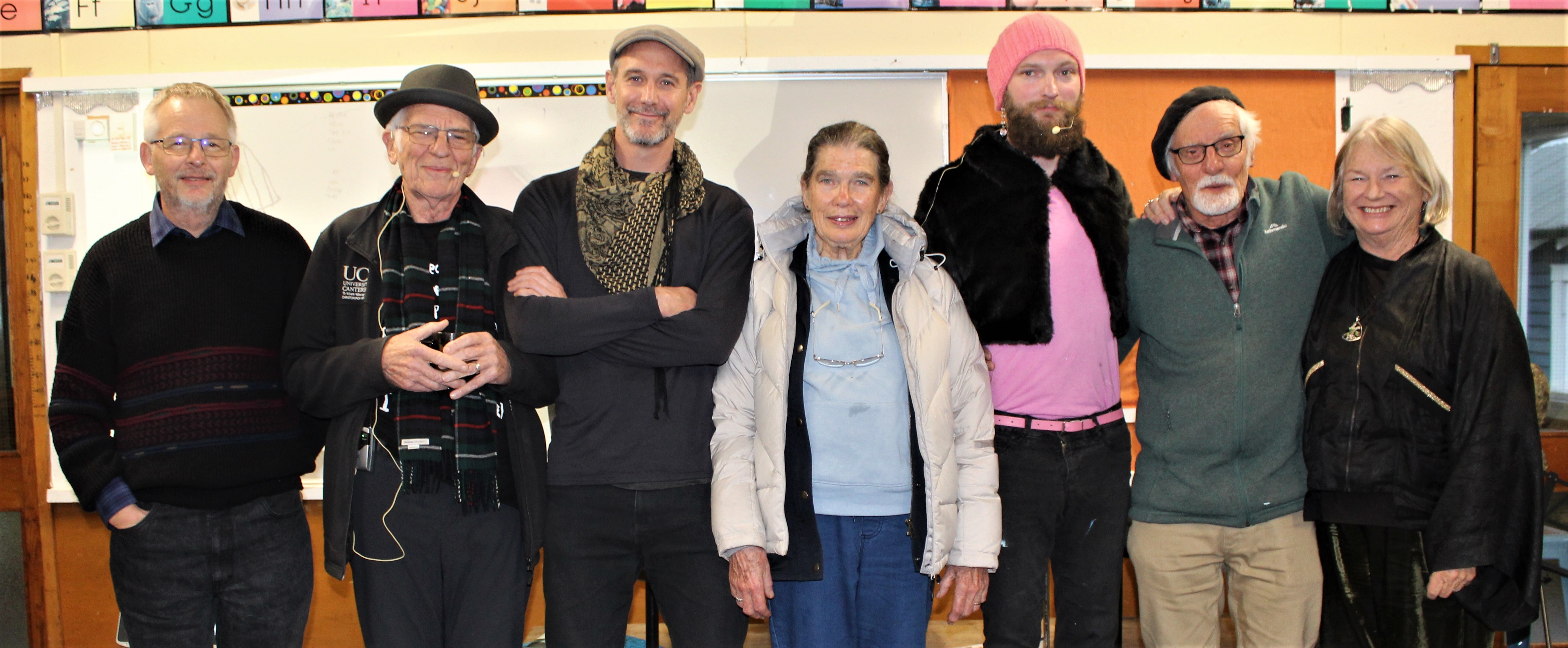
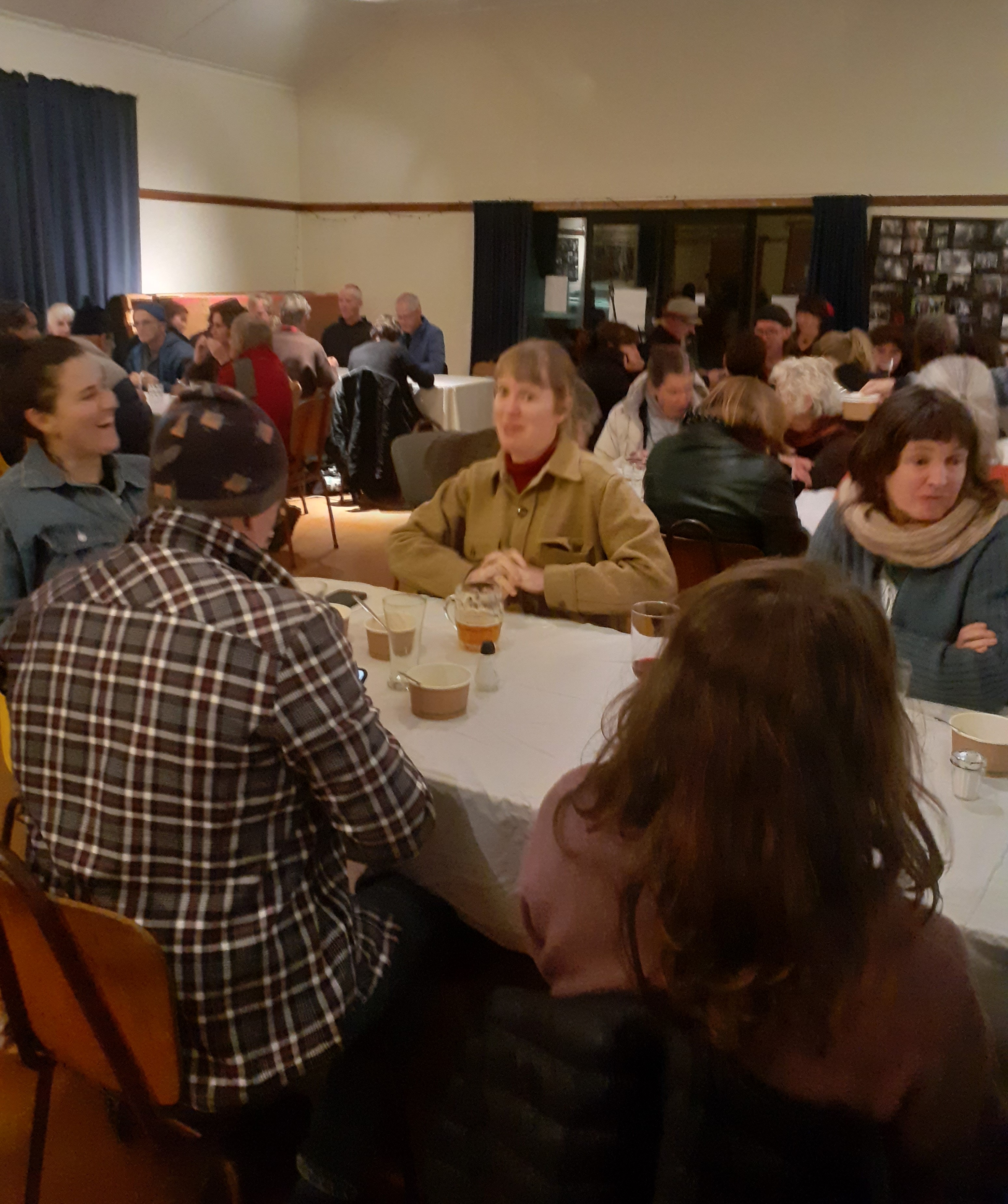
A fifties classroom, windows each side, neon lights, a veranda outside, a crowd of chairs, a sound system and a small dais, two people talking, sometimes three, about writing and life and projects, men and women, gay and hetero, Pākeha and Māori, words and laughter, occasional despair or puzzlement, politics and justice, in between dashes through rain for tea and cake, soup and croissant and a pee; snow threatens on the Pass but tomorrow is another day and tonight we will eat together and plot a future in these uncertain times.

The writers: Bill Nage;kerke, Jeffrey Paparoa Holman, Nic Low, Jane Carswell, Sam Duckor-Jones, Paul Maunder and Paddy Richardson (absent: Jane Kelsey).

The readers: Kai at the Club

Shenanigans

There’ve been some melodramas occurring on the political scene with the defections of Meka Whaitiri from Labour and the resignation of Elizabeth Kerekere from the Greens. Journalists are wary of comment as are the Labour and Green hierarchies. Yet it has been strange behaviour, with ambition, envy and opportunism poking their heads in the door. Meta Whaitiri was on the wrong side of an employment dispute five years ago, was demoted to the back bench, reinstated to ministerial ranking, but lower than some younger Māori women MPs who have been promoted. She suddenly decided to move to Te Pāti Māori, forgot to tell her leader or colleagues of her intentions and fudged the issue with the speaker to stop her possible expulsion from parliament. Instead she is portrayed as victim by her new party, as someone casting off the shackles of the colonist. After a week of silence she proclaims that she had ‘a feeling in her puku’ that it was the right thing to do. Hard to discuss that.

It seems that Dr Kerekere got miffed when her private member’s bill wasn’t pulled but Chloe Swarbrick’s was and pushed the wrong text button and the well-mannered Greens reacted. It was rumoured that she hadn’t been nice around the office either and other allegations surfaced. A long winded enquiry began, taking place during the list ranking process; she being surprisingly high on the recommended list. She had been recruited because she was Māori with strong rainbow connections. The Greens meanwhile had tiriti-aligned their constitution with the new structure giving a sprinkling of Māori members quite a lot of say, unsettling some of the older hands. In a closed zoom call arranged by her supporters within the party, Dr Kerekere made the case to members that she was being shafted by the co leaders and a colleague-leaker. Once again she was victim. There was no room for question or comment and immediately afterward she resigned. Don’t mess with me was the message.

The good old persecutor/victim/rescuer pattern is in play, that pattern which is at the heart of warrior cultures, mythology and the major religions; an elemental pattern but one that causes an awful lot of grief. If there has been any enlightenment it is to realise that the pattern needs to be sidelined if the human species is to realise some form of social ecology.

Rather than promoting tino rangatiratanga and resourcing Māori driven structures, this drive to tiriti align mainly Pākeha organisations is, from my experience, a minefield; for you have the trickster syndrome to cope with, plus a robust confrontational style but with no grudges at the end of the day – something Pākeha need to learn; plus a tolerance of pushing-past-the-boundaries behaviour. And then there’s the religious acknowledgement of higher forces which takes me back to a childhood where grace was said before a meal, prayers said at bedtime and the bible referred to for guidance. But what of Marxist or Freudian rational enquiry (which in turn has its problems)? These questions, this debate, is facile unless the driving force of capitalism is made articulate and acknowledged as the major issue – with its tolerance of anything – as long as a buck is being made.

The final shenanigan was the gob-smacking coronation, where a 16th century ritual (when oaths of fealty muttered reluctantly by recalcitrant princes would have been riven with tension, when the surrounding of the king by Anglican clergy in order to make sure he didn’t fall into the hands of the Papists would also have been highly charged, where one of the princes was turned into something remote and symbolic as an act of God), was re-enacted five centuries later without any attempt to take into account current cultural and political realities. Quite extraordinary. All those soldiers in comic uniforms, the gold coach, the robes, the table of symbolic objects, the kitsch screens for the anointing, the bass profundo, the angelic choir boys… what did they currently signify? A lack of intellect? A final gasp from a broken imperial nation?

I preferred the prologue, a documentary about the soap opera love of melancholic Charlie and jokey Camilla, which has prevailed through divorce, scandal and parental frowns – but without the trials of poverty.

Sometimes things turn out…

Sometimes things turn out well. After a year of hard slog, the repair and upgrade of Jack’s Mill School situated at Kōtuku drew to a conclusion so that a residential centre for the exploration of social change, as well as a community resource, now exists.[1] There was a final drive required to meet the funding deadline but builder and plumber came to the party and a gentle opening took place a week ago. The school had become close to derelict and the site of the children’s cottage a little desolate of purpose so it was lovely seeing people gathering once more.

The whole exercise could have been a disaster and as project manager for Te Puawai Co-operative Society, whose project it was, I was terrified it might go over budget for there were no organisational reserves to call upon. But all was well financially and the funder, Manatū Taonga, Ministry of Culture and Heritage signed off a final report and I could have a moment of great satisfaction. Such moments are experienced on the completion of a play or book, but a physical resource like a school feels of greater import for the physical world has changed for the better.

I came out of the project full of admiration for the tradespeople who have been involved: Mike the builder resolving building issues in an old building where nothing is level or square, the plumbers and electricians installing modern systems in a matter of days, the vinyl layers neatly solving problems – without our brain and muscle not a single wheel will turn is a an absolutely truthful line from a union song. And it helped that a matter-of-fact, problem-solving architect was involved, pleased that the building will be around for another hundred years.


[1] The school saw a progressive headmaster, Edward Darracott, institute a first exercise in hands on, technical education when he got the children to design, build and furnish a model, child-sized cottage, which still stands and which caused the site to be designated a category one historic site.

Entrepreneurialism

In the 1990s I was privileged to work with the Hutt Valley Tokelauan community and helped them devise a couple of plays, which, after performances locally, we took to Tokelau, spending a month on the three atolls. It was a time of exploring often complex community relationships.

At the end of the trip, on the last atoll, we came across a man who was entrepreneurial, having established a sort of nightclub. As well, anticipating the tourist (Tokelau has no tourism), he’d trained up a dance group who could entertain the visitor. After a month free of entrepreneurialism, it was a shock to come across the phenomenon, which in this context seemed both mad and dangerous as he pursued the commodification of social and cultural relations.

I write of this because as Covid recedes, the entrepreneurial urge seems to have intensified. It has become the engine of the hegemony, that web of consciousness created daily which Gramsci first described. Every facet of life is required to be entrepreneurial, from services to schools to business to charity. Even that which resists has to do so in entrepreneurial terms. The climate crisis will only be solved by the entrepreneur. Meanwhile the refugee count daily increases, inequity increases, natural disasters occur weekly and anxiety infects the young at an alarming rate. But it is considered that these will only be solved by the entrepreneurial impulse, the teaching of which generates a whole industry in itself. It is preached in every ad, in education, and of course is the life blood of the social media with its mania for self promotion.  It partners happily with the pornographic impulse which commodifies desire.  It is akin in density to the triumphant working class clichés of the old USSR, which infected every facet of life, at the same time as the more articulate members of that same class were being sent to the Gulag.

As we begin to ponder a programme for a school for social change, it presents a central dilemma. How to circumvent it or confront without seeming eccentric or marginal?

Whenua

Almost two years ago my daughter had her first child in Australia. Recently, when it was obvious they would not be coming back to Aotearoa as soon as they thought, she asked me to bring back the boy’s whenua and bury it. It had been in their freezer since his birth. It needs to be in Papatuanuku, she said to me. Where they were living, a suburb adjacent to an army base, was not Papatuanuku. It had another mythology, but the dreaming had been sorely disrupted.

You’re happy for it to be in the bush near the creek? She agreed. So I rang the airline and there was no problem with bringing a placenta back.

As I packed for leaving she brought it to me. It was in a sealed plastic pot with the hospital label on it. It was surprisingly light. I placed it in my suitcase and packed clothes around it, caught the plane, declared it at customs, who were mainly concerned with Indonesian food products because of an outbreak of the dreaded foot and mouth disease in that country.

When I got home I walked down the track to the creek with the secateurs. In three weeks the blackberry would probably have thrown out wild tendrils.  I walked over the bridge I had made, and cut my way through tendrils but it wasn’t too bad and I could eat some late fruit.

Once in the trees I veered off the path to a moss covered mound where I’d buried a dog ten years ago. It’s a peaceful spot and I wondered whether this was the place for the whenua? Next I looked at the base of a tall beech tree which has shot up over the last sixty years or so. That would be more of a male place, whereas the moss covered mound was feminine. No need to immediately decide.

As I walked down the track to the creek bed and paddock I realised that burying the whenua would make this place even more resonant than it has already become from almost daily wandering. I’d often learned scripts on these walks, pondered issues, thrown sticks for the replacement dog, watched the creek water rise and fall and the pond level fluctuate. Each day the dog swam in the pond or chased a stick thrown into the creek. I’d watched children play on the rocks, disturbed kereru, been fluttered at by pīwakawaka, the dog had chased weka and hares and ducks had given birth, gorse had grown then fallen over after heavy rain and I’d sawn my way through branches to keep the track clear. I’d realised that the timber at the bottom of the pond was from an old gold dredge, and I’d researched the geology of the area. But now there would be a genetic connection to the earth. It was a different sort of thought, a humbling thought.

It was a compliment that my daughter had entrusted this task to me and that this village where I live and where she lived for a period was the place to receive the whenua.  I had sometimes thought I would like to be buried in the mound next to the dog. I decided I would bury the placenta at the base of the tree and find a marker rock to place on top. This would slowly become sacred ground. Papatuanuku.

But what of a karakia? I went home and found suitable words from Fairburn’s Dominion, a poem that always speaks to me: ‘Land of mountains and running water, rocks and flowers and the leafy evergreen. O natal earth, the atoms of your children are bonded to you for ever.

Marketplace

Hanging out with a grandchild, I become aware of the extraordinary market for products related to child rearing, with every age a target, from napkins to baby clothing to cribs to front packs to back packs to silhouette books readable by unfocused eyes, to prams, to car seats, to surveillance devices, to mobiles, to teethers, to first toys… And then it really takes off, to balls that glow, to teddy bears, to various rattles and toys that beep and whistle and sing nursery rhymes, to buggies, to sleep noise and whales singing, to lotions, to special play facilities for a rainy day and organisers of first birthday parties. And now trucks and trains and cars and diggers and dolls that speak and wee, and animals, all with built in sounds, ten different lego systems, indoor swings and slides and a huge range of books, subscription television channels with every rhyme and game in the annals of childhood animated, plus series with infinite episodes, some of which are very skilful. Meanwhile there is a library of parenting books constantly updated, play dates and play groups, creches for those returning to work, whose equipment will be more sophisticated and robust. Museums, libraries and art galleries donate a floor to interactive and tactile activities for little ones, with pram parks and little cafes. On the toy front now, whole systems of motorways or railway are available with each vehicle an electronic marvel of sound and song… there must be teams of researchers, designers and marketers out there.

Whatever happened to kids floating sticks in the creek? Or climbing a tree? Or building a castle with river stones? I feel Neanderthal as I ask the question. And have the thought that this market of stuff will possibly stop the mechanism of symbol formation and replace it with the human algorithm. That’s my hunch. That’s my fear.

Create a free website or blog at WordPress.com.

Up ↑